
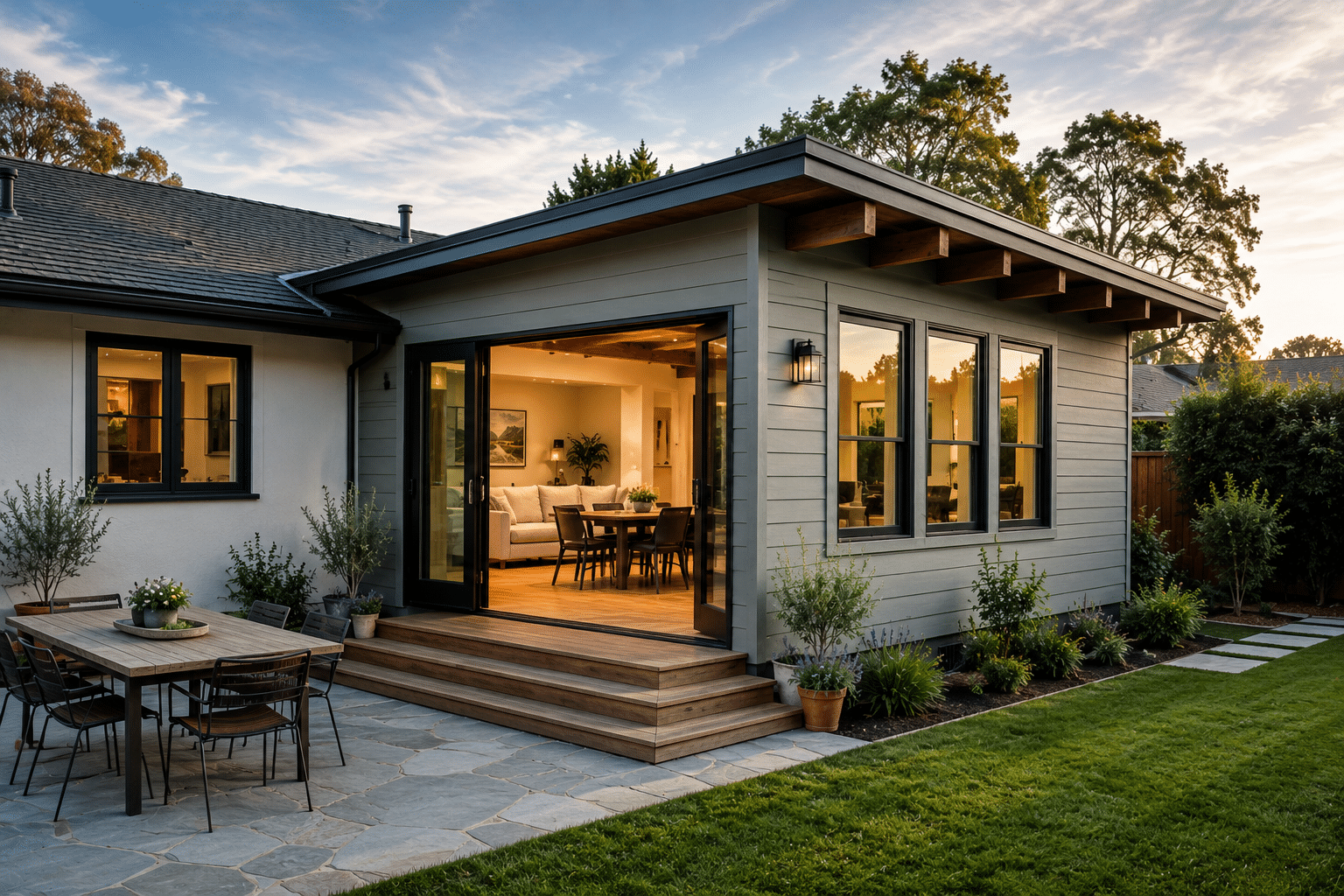
A Home Addition That Feels Original: What Makes New Space Belong
A home addition can answer a practical need and still raise a quieter question: will the new space feel like part of the house, or like a separate idea attached later?
A home addition that feels original does not have to copy every detail of the existing home. It simply has to speak the same visual language. The transition should feel considered, the new room should make sense in daily life, and the materials should feel related rather than randomly matched.
Some additions announce themselves. Others settle in quietly. The second kind feels less like a new object and more like the next sentence in a story the house was already telling.
Every Home Already Has a Language
Before deciding what a new space should look like, it helps to notice what is already there.
One home may have low rooflines and wide windows. Another may feel defined by warm wood, simple trim, or smaller rooms that open gradually into one another. These details create a certain rhythm, even when the homeowner has never stopped to name it.
A new addition does not need to repeat all of those features. It may only need to acknowledge a few of them.
Think of it less as matching a paint swatch and more as listening for the home’s accent.
The Transition Is Where People Feel the Difference
The place where the original house meets the addition may be the most noticeable part of the entire project.
A sudden change in flooring, ceiling height, doorway size, or natural light can make the boundary feel obvious. Sometimes that contrast is intentional. Other times, it can make two otherwise attractive spaces feel unrelated.
The walking path matters too. A room may look connected in a photograph but feel separate if reaching it requires an awkward turn or an unfamiliar route through the house.
People experience their homes while moving through them. The transition between old and new is therefore more than a visual detail. It becomes part of the daily routine.
Consistency Does Not Require Sameness
A new room does not have to look old.
Trying to recreate every original detail can sometimes make an addition feel staged rather than natural. A quieter approach is to carry a few familiar elements into the new space.
That might mean a related flooring tone, similar door proportions, familiar trim, or a color palette that feels at home beside the existing rooms.
The point is not sameness. It is recognition.
Someone should be able to enter the new room and feel that the house has changed without feeling that it has suddenly changed subjects.
Light Can Carry the Mood from One Room to the Next
Light has a way of shaping how a room feels before anyone notices the finishes.
An existing home may feel soft and shaded, bright and open, or warm during a certain part of the day. If the addition has a completely different atmosphere, it may begin to feel like its own separate zone.
Windows are part of that conversation, but so are the views they create. A new room might look toward a garden, patio, neighboring structure, or part of the yard that was rarely noticed before.
On the Central Coast, an outdoor space may already feel like an extension of the home. The relationship between the new room and that familiar view can influence whether the addition feels connected or detached.
The Exterior Is Part of the Same Story
From outside, an addition becomes part of the home’s overall shape.
The roofline, window placement, exterior materials, and point where the walls meet all contribute to the impression. None of these details has to be identical to the original house, but they should feel as though they were considered together.
Sometimes a slightly quieter exterior treatment allows the original home to remain the visual lead. In another setting, repeating a familiar shape or material may create enough connection.
The goal is not to hide the fact that the house has changed. It is to keep the new portion from feeling like it arrived without meeting the rest of the home first.
Daily Life May Be the Real Test
An addition can look visually connected and still feel separate if it does not fit the household’s routines.
Imagine carrying something from the kitchen into a new dining area or moving from the living room into a new family space. The route between those rooms matters because a house is experienced in motion, not only in photographs.
A new room begins to feel established when using it feels ordinary.
The doorway is simply a doorway. The new space becomes the place where someone reads, works, rests, or gathers with family. Nobody pauses to think about where the original house ended.
That may be the clearest sign that the addition belongs.
A Home Can Grow Without Losing Its Character
A home addition does not need to erase the history of the original house.
A slight difference between old and new may even give the home more character. What matters is whether the spaces feel comfortable beside one another and whether the addition respects the personality that was already there.
Early planning can begin with simple observations. Notice how people move through the home, where the light feels most pleasant, which details repeat from room to room, and what gives the house its familiar character.
H&M Construction works with homeowners throughout San Luis Obispo County and Santa Barbara County on home additions and the early decisions that shape them. If you are beginning to imagine how new space might relate to the home you already have, contact H&M Construction to start a conversation.